

Charting the Economy
Third Quarter 2025
The U.S. Bureau of Economic Analysis (BEA) released its most recent estimate of gross domestic product (GDP) and other key statistics from the National Economic Accounts (NEAs), which include the National Income and Product Accounts (NIPAs) and the Industry Economic Accounts, on January 22, 2026. This quarter's ”Charting the Economy” takes a closer look at the economy's performance in July, August, and September, with details on how much people are spending and earning, industry production and profits, and how prices are changing.
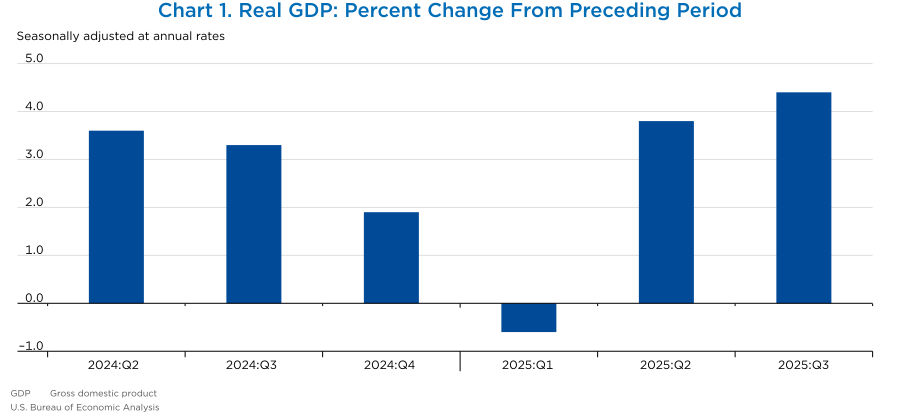
- In the third quarter, real GDP increased at an annual rate of 4.4 percent after increasing 3.8 percent in the second quarter.1
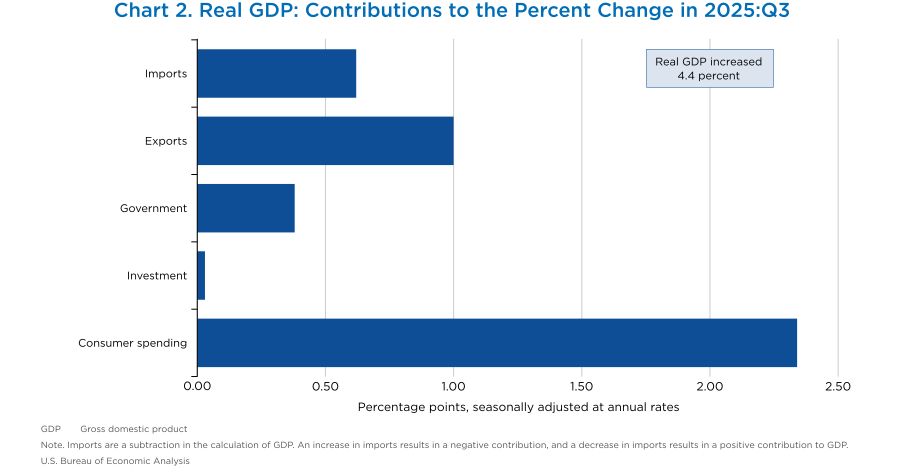
- The increase in real GDP in the third quarter reflected increases in consumer spending, exports, government spending, and investment. Imports, which are subtracted in the calculation of GDP because they are embedded in other components of GDP, decreased.2
- The increase in consumer spending reflected increases in both services and goods. The increase in services was led by health care (both outpatient services and hospital and nursing homes) and “other services” (mainly professional and other services and international travel). The increase in goods was led by recreational goods and vehicles (mainly video, audio, photographic and information processing equipment and media) and “other nondurable goods” (notably, pharmaceutical products) that was partly offset by a decrease in motor vehicles and parts (mostly new light trucks).
- The increase in exports reflected increases in both goods and services. Within goods, the increase was led by capital goods, except automotive; nondurable consumer goods; and “other goods.” Within services, the increase primarily reflected “other business services,” transport, and charges for the use of intellectual property.
- The increase in government spending reflected increases in state and local government consumption expenditures and national defense consumption expenditures.
- The increase in investment was led by intellectual property products (notably, research and development) and equipment (mainly information processing equipment).
- The decrease in imports reflected a decrease in goods, led by nondurable consumer goods, except food and automotive.
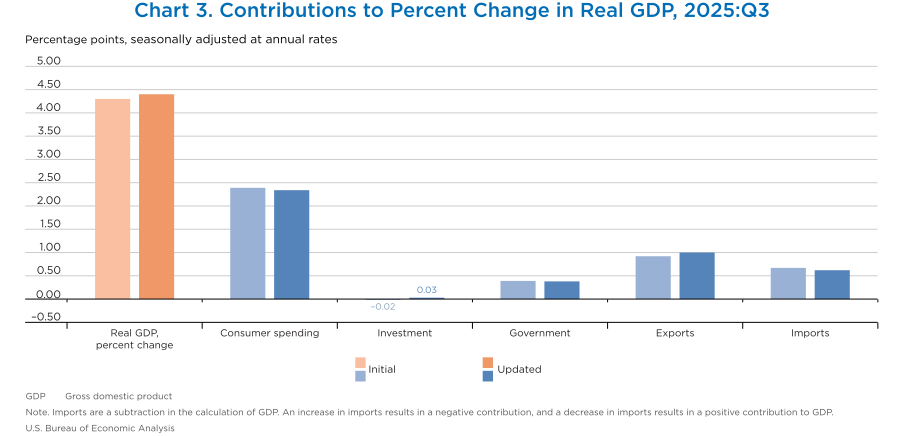
- In the initial estimate for the third quarter, real GDP increased at an annual rate of 4.3 percent.
- In the updated estimate, real GDP increased 4.4 percent, an upward revision of 0.1 percentage point from the initial estimate. This revision primarily reflected upward revisions to exports and investment that were partly offset by a downward revision to consumer spending. Imports were revised up.
- Each GDP estimate for a quarter incorporates increasingly comprehensive and improved source data. For more details, refer to “GDP Revision Information” on the BEA website.
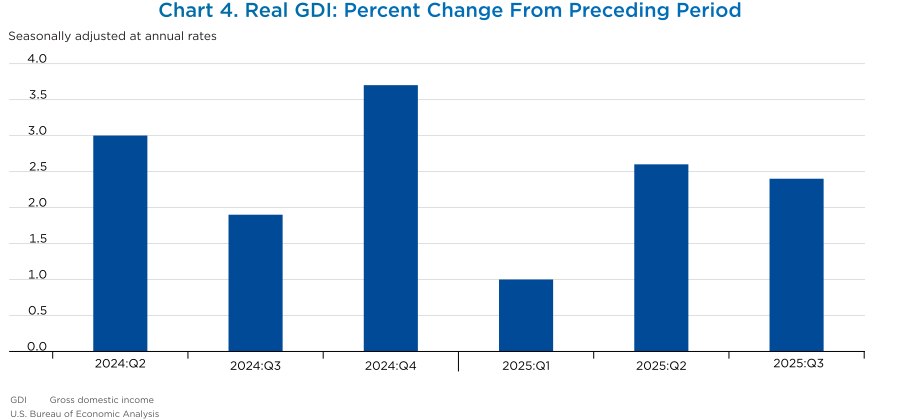
- Real gross domestic income (GDI) increased 2.4 percent at an annual rate in the third quarter, following an increase of 2.6 percent in the second quarter.
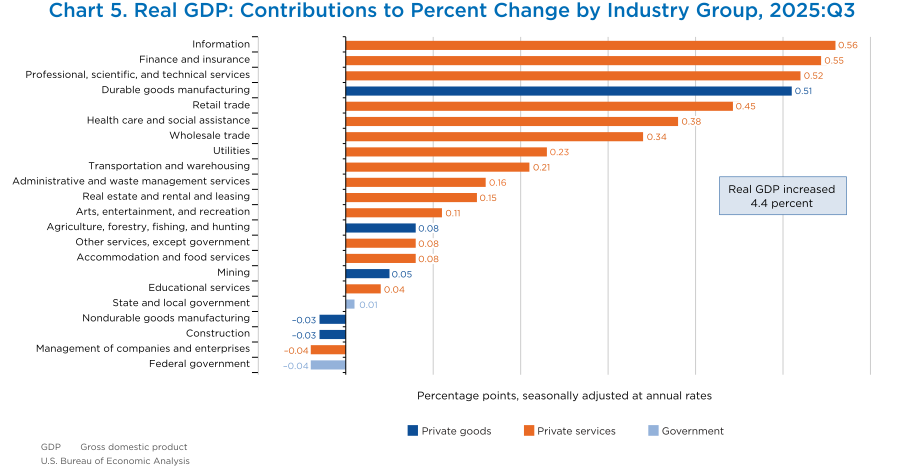
- From an industry perspective, the increase in real GDP in the third quarter reflected increases of 5.3 percent in real value added for private services-producing industries (led by information; finance and insurance; and professional, scientific, and technical services) and 3.6 percent for private goods-producing industries (mainly durable-goods manufacturing) that were partly offset by a decrease of 0.3 percent in real value added for government (notably, federal).
- Overall, 18 of 22 industry groups contributed to the increase in real GDP.
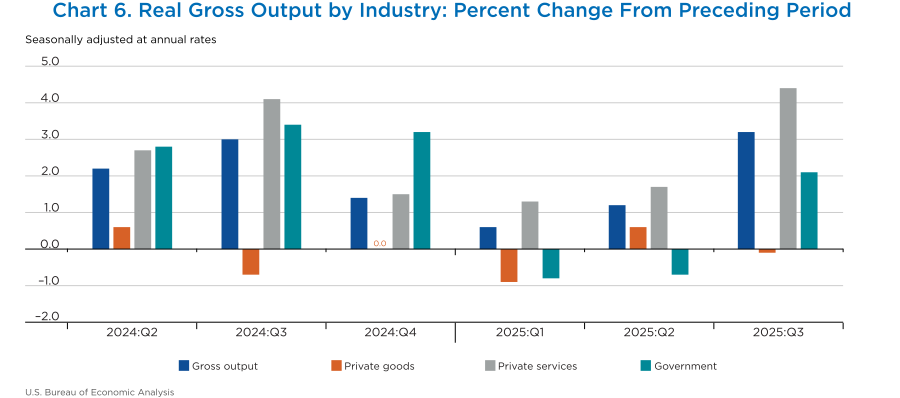
- Real gross output by industry increased 3.2 percent in the third quarter.
- This reflected increases of 4.4 percent for private services-producing industries and 2.1 percent for government that were partly offset by a decrease of 0.1 percent for private goods-producing industries.
- Overall, 19 of 22 industry groups contributed to the increase in real gross output.3
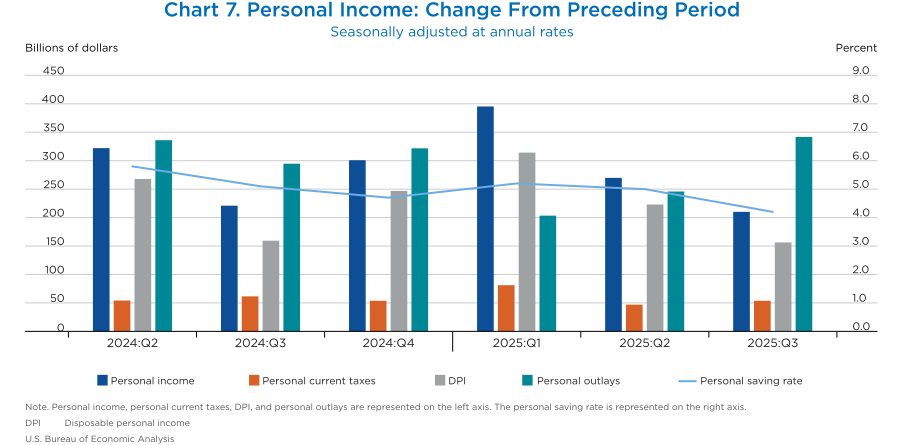
- Measured in current dollars, personal income increased $210.1 billion in the third quarter.
- The increase primarily reflected increases in compensation (led by private wages and salaries) and personal current transfer receipts (mainly Medicaid and Medicare).
- Personal current taxes increased $53.8 billion, disposable personal income increased $156.3 billion, and personal outlays increased $341.8 billion.
- The personal saving rate was 4.2 percent.
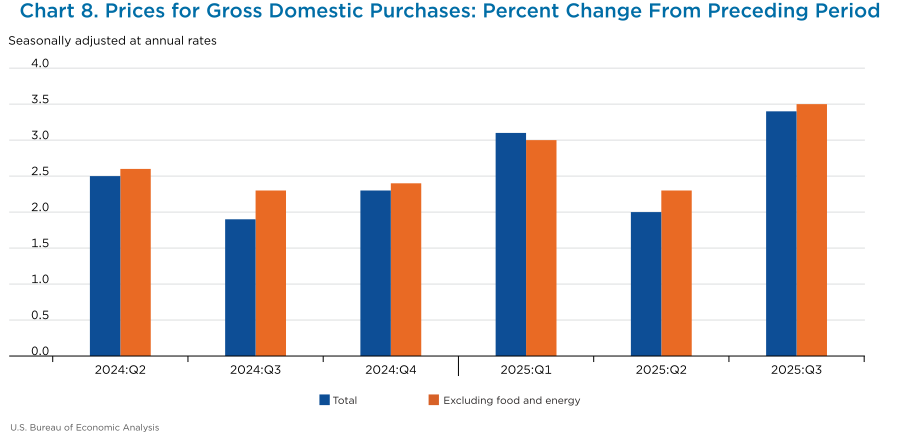
- The price index for gross domestic purchases increased 3.4 percent in the third quarter.
- Within gross domestic purchases, food prices increased 2.2 percent, and prices for energy goods and services increased 1.1 percent.
- Excluding food and energy, gross domestic purchases prices increased 3.5 percent.
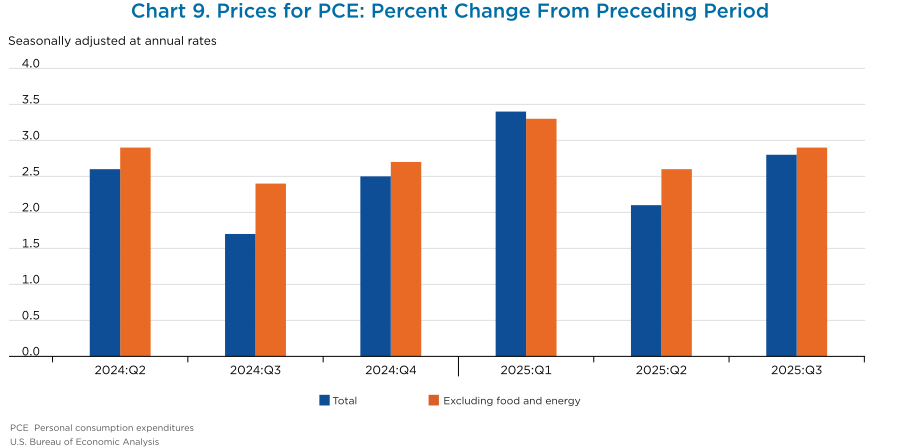
- The price index for personal consumption expenditures (PCE) increased 2.8 percent in the third quarter.
- PCE prices for services increased 3.3 percent, led by increases in financial services and insurance, housing and utilities (mainly housing), and health care (both hospital and nursing homes and outpatient services).
- PCE prices for goods increased 1.6 percent, led by increases in other nondurable goods (mainly recreational items), food and beverages, and furnishings and durable household equipment.
- Excluding food and energy, the core PCE price index increased 2.9 percent.
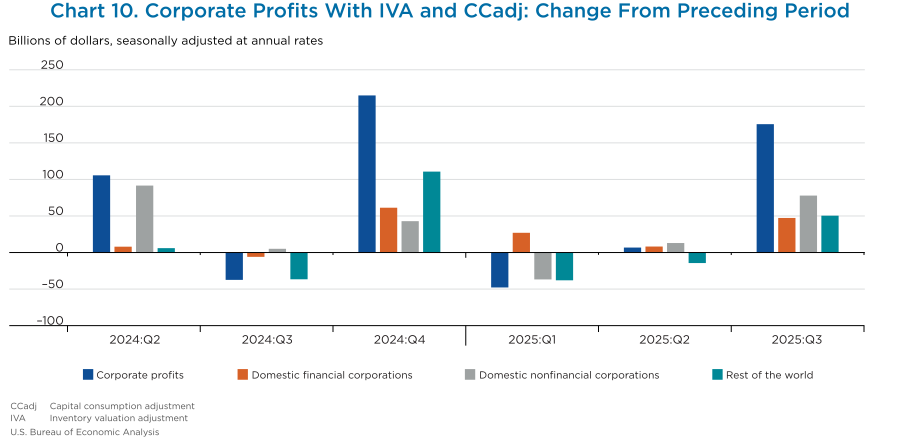
- Measured in current dollars, profits from current production (corporate profits with the inventory valuation adjustment (IVA) and the capital consumption adjustment (CCAdj)) increased $175.6 billion, or 4.5 percent at a quarterly rate, in the third quarter.
- Profits of domestic financial corporations increased $47.3 billion (6.1 percent), profits of domestic nonfinancial corporations increased $77.9 billion (2.9 percent), and rest-of-the-world profits increased 50.4 billion (10.7 percent).
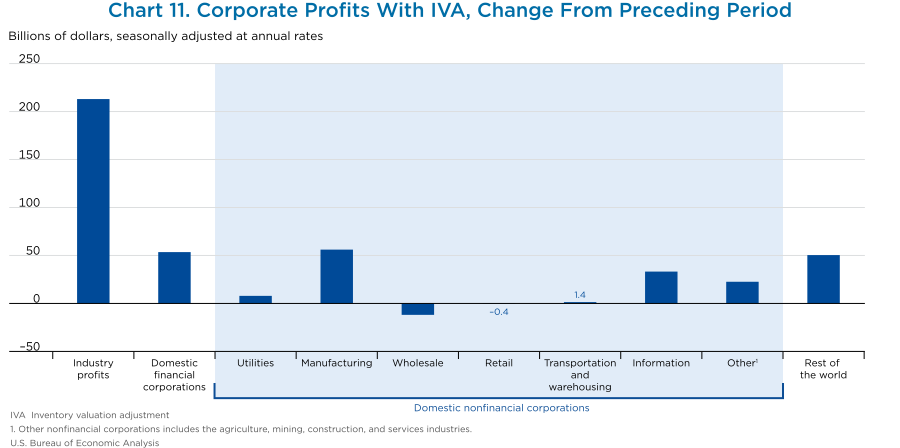
- Measured in current dollars, industry profits (corporate profits by industry with IVA) increased $213.0 billion, or 5.3 percent at a quarterly rate, in the third quarter.
- Domestic financial profits increased $53.5 billion (6.2 percent), domestic nonfinancial profits increased $109.0 billion (4.1 percent), and rest-of-the-world profits increased $50.4 billion (10.7 percent).
- Real estimates are in chained (2017) dollars, and price indexes are chain-type measures. Quarterly estimates are expressed at seasonally adjusted annual rates, which reflect a rate of activity for a quarter as if it were maintained for a year.
- In this essay, “consumer spending” refers to “personal consumption expenditures,” “inventory investment” refers to “change in private inventories,” and “government spending” refers to “government consumption expenditures and gross investment.”
- Refer to “What is gross output by industry and how does it differ from gross domestic product (or value added) by industry?” for more information.
Suggested citation
Dorian L. Turner, “Charting the Economy: Third Quarter 2025,” Survey of Current Business (January 29, 2026), https://doi.org/10.66137/VPLG5385.
