

A Look at the U.S. International Transactions
Third Quarter 2025
This article highlights statistics on the U.S. International Transactions Accounts and the current-account deficit, which reflects the combined balances on trade in goods and services and income flows between U.S. residents and residents of other countries. These statistics are published by the U.S. Bureau of Economic Analysis (BEA) each quarter. Detailed statistics for U.S. international transactions and a description of the estimation methods are available on the BEA website. For the statistics, see the International Transactions Accounts Interactive Data Application. For the methods, see U.S. International Economic Accounts: Concepts and Methods.
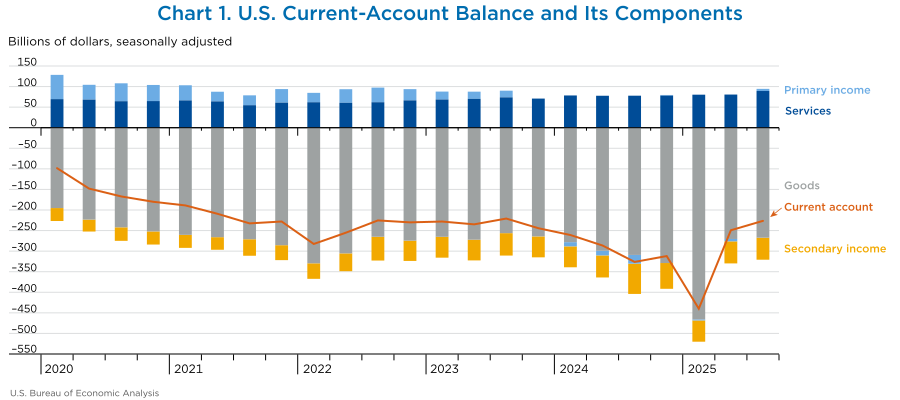
- The current-account deficit narrowed by $22.8 billion, or 9.2 percent, to $226.4 billion in the third quarter of 2025.
- The third-quarter narrowing of the current-account deficit reflected a shift in the balance on primary income from a deficit in the second quarter to a surplus in the third quarter, an expanded surplus on services, and a reduced deficit on goods.1
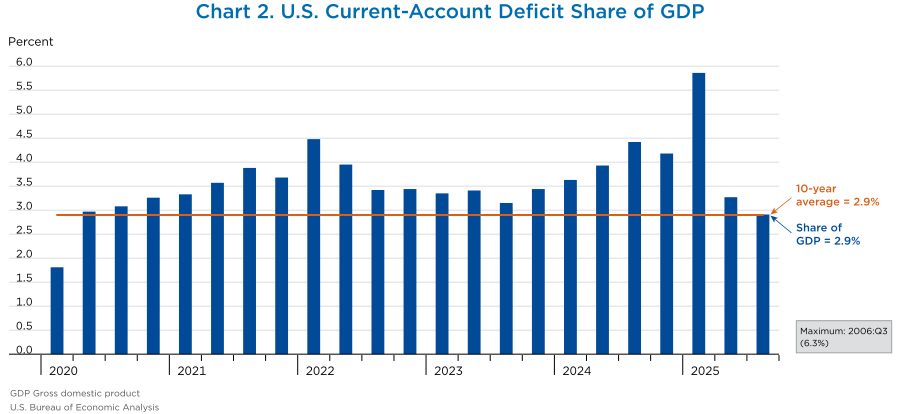
- The third-quarter deficit was 2.9 percent of current-dollar gross domestic product, down from 3.3 percent in the second quarter and in line with the 10-year average.
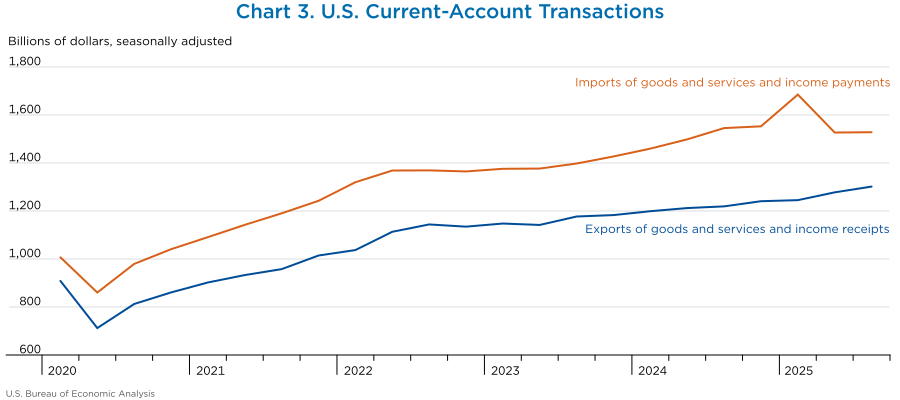
- Exports of goods and services to, and income received from, foreign residents increased $24.1 billion, or 1.9 percent, to $1.30 trillion in the third quarter.
- Imports of goods and services from, and income paid to, foreign residents increased $1.3 billion, or 0.1 percent, to $1.53 trillion.
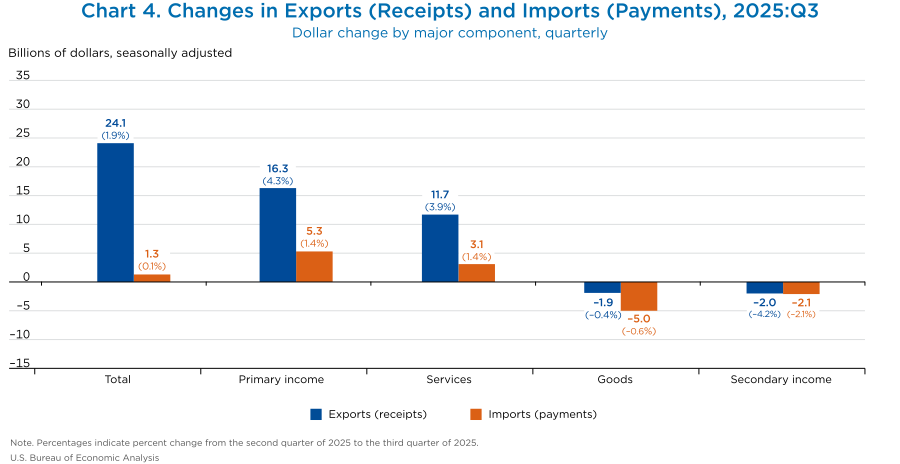
- The increase in exports of goods and services and income receipts was due to primary income receipts and services exports increases, which were partly offset by decreases in secondary income receipts and goods exports.
- The increase in imports of goods and services and income payments was due to primary income payments and services imports increases, which were mostly offset by decreases in goods imports and secondary income payments.
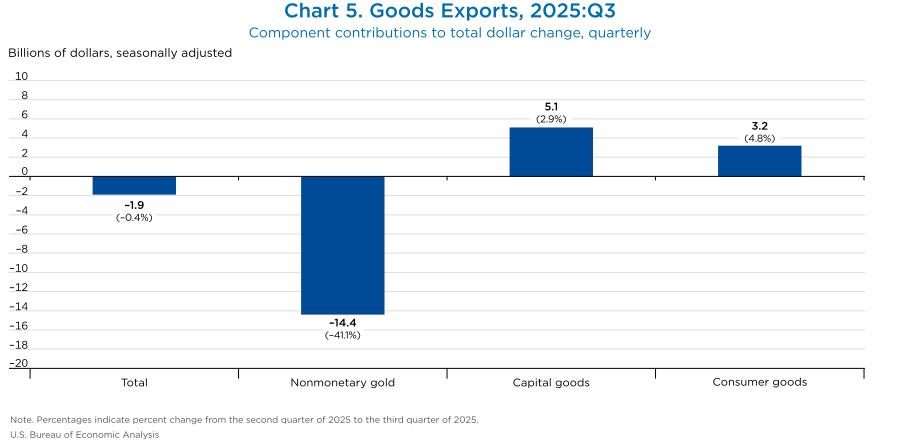
- Exports of goods decreased $1.9 billion, or 0.4 percent.
- The decrease was led by nonmonetary gold, which was partly offset by increases in capital goods and consumer goods.
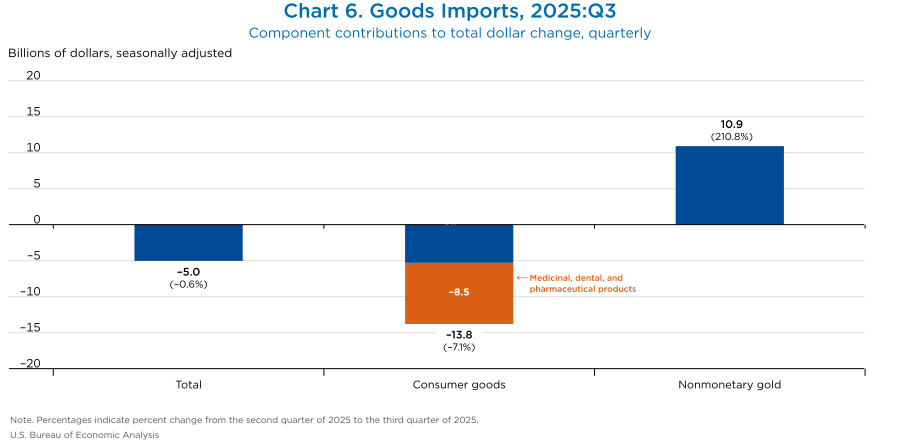
- Imports of goods decreased $5.0 billion, or 0.6 percent.
- The decrease was led by consumer goods and was partly offset by an increase in nonmonetary gold.
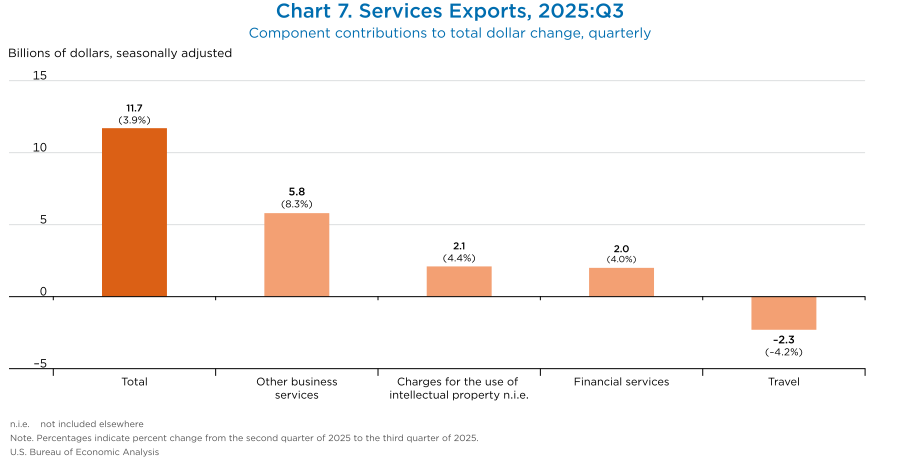
- Exports of services increased $11.7 billion, or 3.9 percent.
- Most of the increase was in “other business services,” mostly professional and management consulting services; the largest offsetting decrease was in travel.
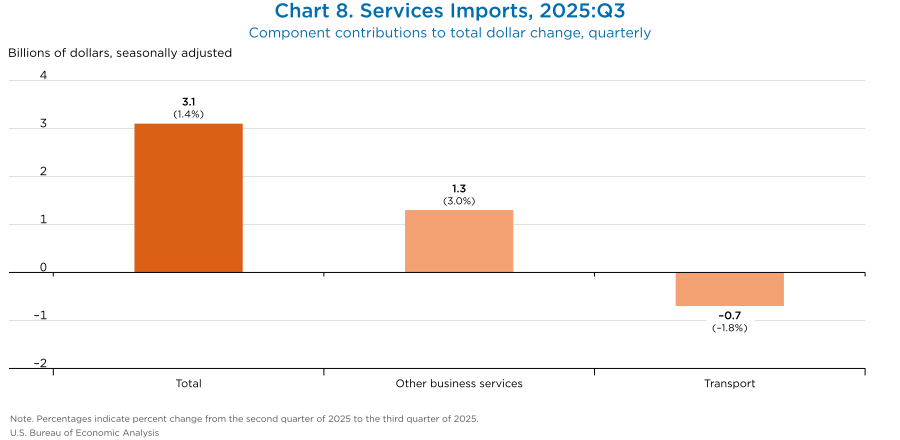
- Imports of services increased $3.1 billion, or 1.4 percent.
- The increase is the result of small and mostly offsetting changes across the major categories.
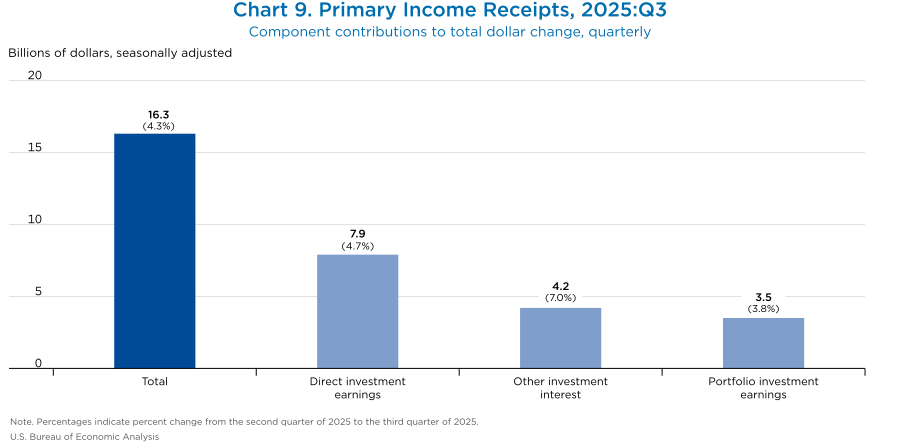
- Primary income receipts increased $16.3 billion, or 4.3 percent.
- The increase was led by direct investment earnings, followed by “other investment interest” and portfolio investment earnings.
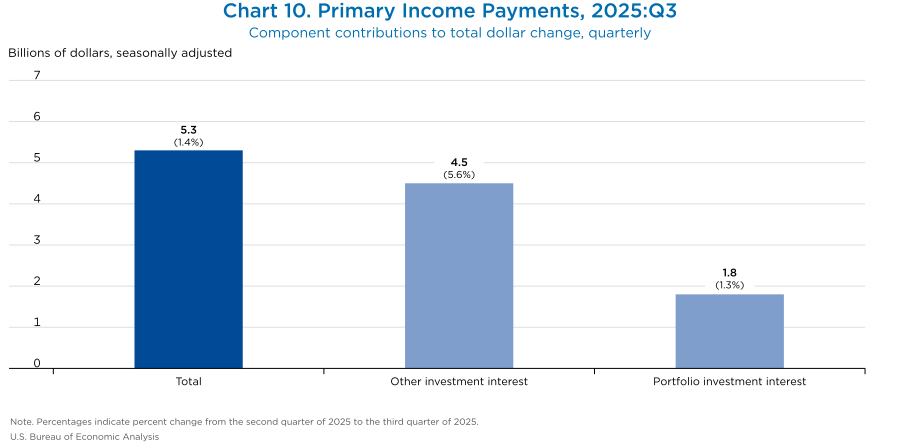
- Primary income payments increased $5.3 billion, or 1.4 percent.
- This increase was led by other investment interest, followed by portfolio investment interest.
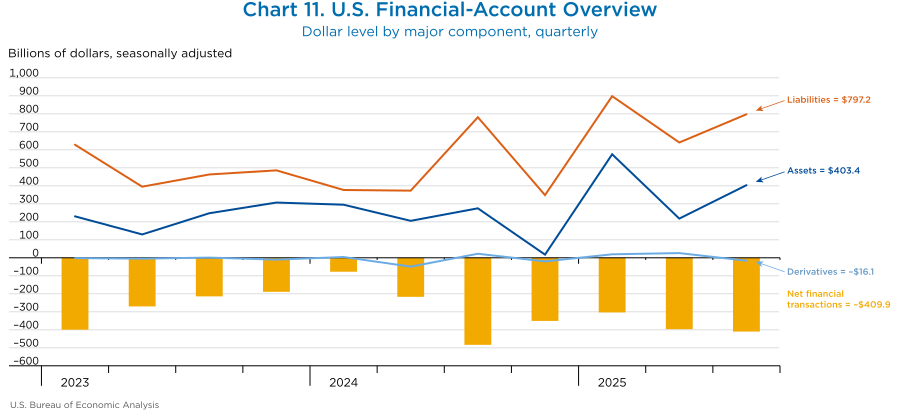
- U.S. residents' foreign financial assets increased by $403.4 billion in the third quarter.
- The increase in assets was led by “other investment assets” (which includes loans and deposits), followed by direct investment assets and portfolio investment assets.
- U.S. liabilities to foreign residents increased by $797.2 billion in the third quarter.
- The increase in liabilities was led by portfolio investment liabilities, followed by “other investment liabilities” and direct investment liabilities.
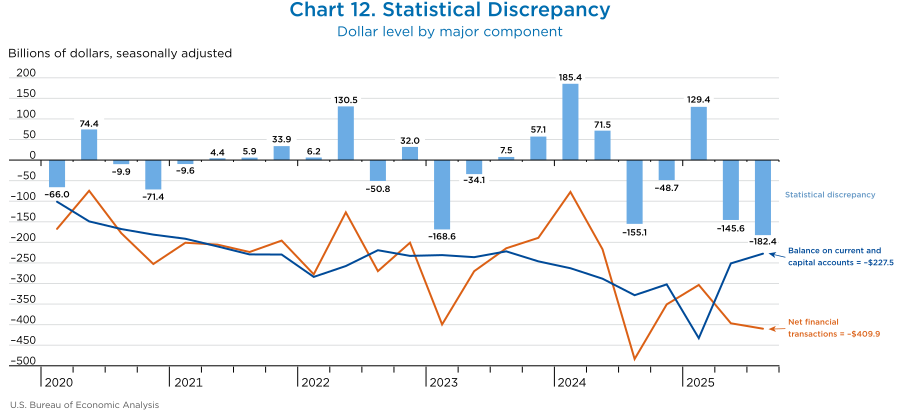
- The statistical discrepancy, shown as the difference between net financial transactions and the balance on the current and capital accounts, was –$182.4 billion in the third quarter, following a revised –$145.6 billion in the second quarter.2
- U.S. international transactions are presented in current dollars in accordance with international statistical presentation guidelines. For a comparison of current-dollar, or nominal, and inflation-adjusted, or real, measures of international transactions, see “SECTION 4 – FOREIGN TRANSACTIONS” of the National Income and Product Accounts.
- Timing, omissions, seasonality, and unsettled market conditions can contribute to a discrepancy.
Suggested citation
Elliot Berg and David Stein, “A Look at the U.S. International Transactions: Third Quarter 2025,” Survey of Current Business (January 29, 2026), https://doi.org/10.66137/HZDZ4523.
