

Regional Economic Accounts
Results of the 2025 Annual Update
On September 26, 2025, the U.S. Bureau of Economic Analysis (BEA) began releasing the results of the annual update of the Regional Economic Accounts (REAs) alongside the update of the National Economic Accounts (NEAs). This was a combined release that included new and updated quarterly and annual statistics on state personal income and gross domestic product (GDP) by state and, for the first time, annual statistics on personal consumption expenditures (PCE) by state. County-level personal income and GDP statistics are also planned to be released together for the first time in a combined release on February 5, 2026. By consolidating these releases, BEA aims to provide a more comprehensive and timely view of state and county economies nationwide.
With the 2025 annual update, the REAs incorporated results from the annual update of the NEAs as well as more complete and detailed regional source data than previously available. In addition to new and revised national data, main updates to the NEAs included added detail on data centers to improve estimates of private fixed investment in office structures, improved treatment of “super” dividends—dividends disproportionately large relative to a company’s distributable income—by classifying excess dividends as financial transactions in line with updated international standards, and improved measures of research and development (R&D) investment by banks using projections from the National Science Foundation’s Business Enterprise R&D Survey.1 More information on the new and updated regional source data is provided later in the article.
The annual GDP by state and state personal income statistics were revised from 2020 to 2023, and new statistics based on more complete source data and the annual methodology were released for 2024.2 PCE by state statistics were revised from 2020 to 2023, and new statistics were released for 2024. Quarterly estimates of GDP and personal income by state were revised from the first quarter of 2020 through the first quarter of 2025, and new estimates were released for the second quarter of 2025.
This article highlights the annual state estimates for 2024 and summarizes some of the impacts of the annual update on the REA estimates. Additional details on the annual update are available at “Information on 2025 Annual Updates to the National, Industry, and State and Local Economic Accounts.”
This section presents the latest annual estimates for GDP by state, state personal income, and PCE by state. These measures show the value of goods and services produced by industries, the incomes earned by households, and the composition of household consumption in each state. Together, they provide a detailed view of economic activity and trends across states.
GDP by state
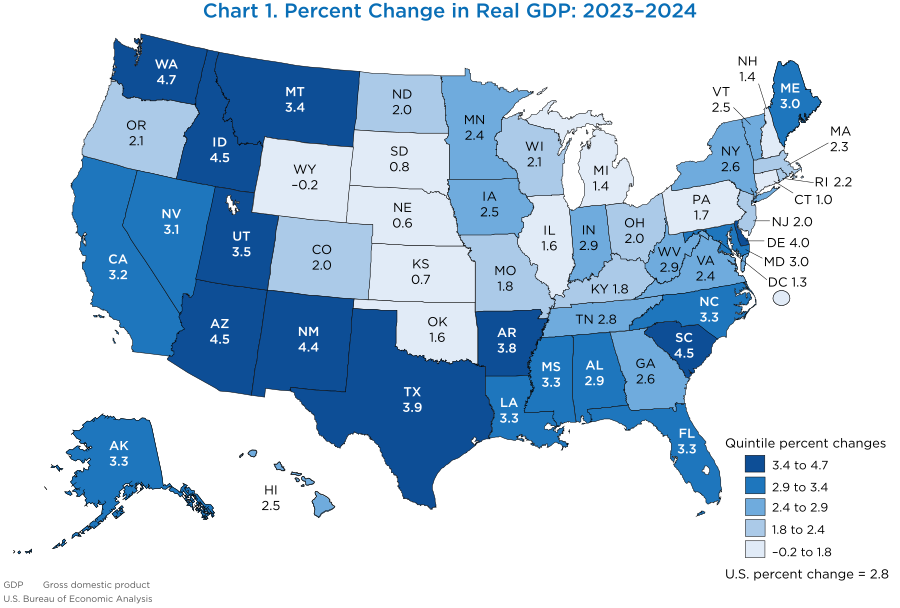
At the national level, real GDP grew 2.8 percent in 2024. Growth occurred in every state and the District of Columbia except Wyoming (chart 1). The fastest growing states were Washington (4.7 percent), Arizona (4.5 percent), South Carolina (4.5 percent), and Idaho (4.5 percent). In the District of Columbia, real GDP increased by 1.3 percent. The slowest growing states were Nebraska (0.6 percent) and Kansas (0.7 percent). Wyoming was the only state to experience a decline, with real GDP decreasing by 0.2 percent.
National real GDP growth in 2024 was driven by a broad range of industries (chart 2). Retail trade; educational services, health care, and social assistance; and nondurable-goods manufacturing together accounted for nearly half of total growth. Other notable contributors included information; finance, insurance, and real estate, rental, and leasing; and professional and business services, each adding more than a quarter of a percentage point to national GDP growth. In contrast, several industries experienced declines, including wholesale trade, durable-goods manufacturing, and “other services” (except government and government enterprises).
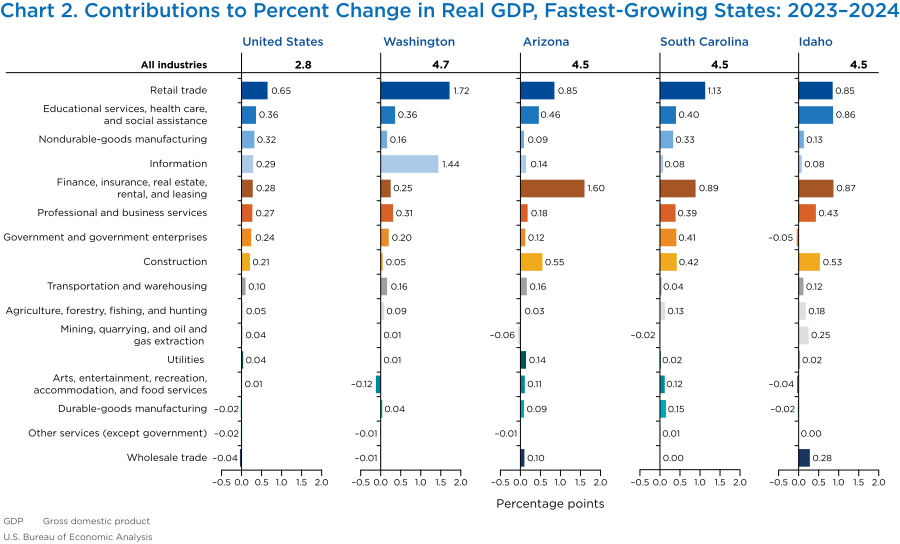
Industries that drove national growth also played a major role in the fastest growing states. In Washington, retail trade was the leading contributor to real GDP growth, followed by information. Together, these two industries accounted for 3.16 percentage points of Washington’s 4.7 percent growth. Finance, insurance, and real estate, rental, and leasing led real GDP growth in Arizona and Idaho. Retail trade; educational services, health care, and social assistance; professional and business services; and construction also made notable contributions. In South Carolina, retail trade was the leading contributor to GDP growth followed by finance, insurance, real estate, rental, and leasing. South Carolina further benefited from sizable contributions by educational services, health care, and social assistance; nondurable-goods manufacturing; professional and business services, government and government enterprises; and construction.
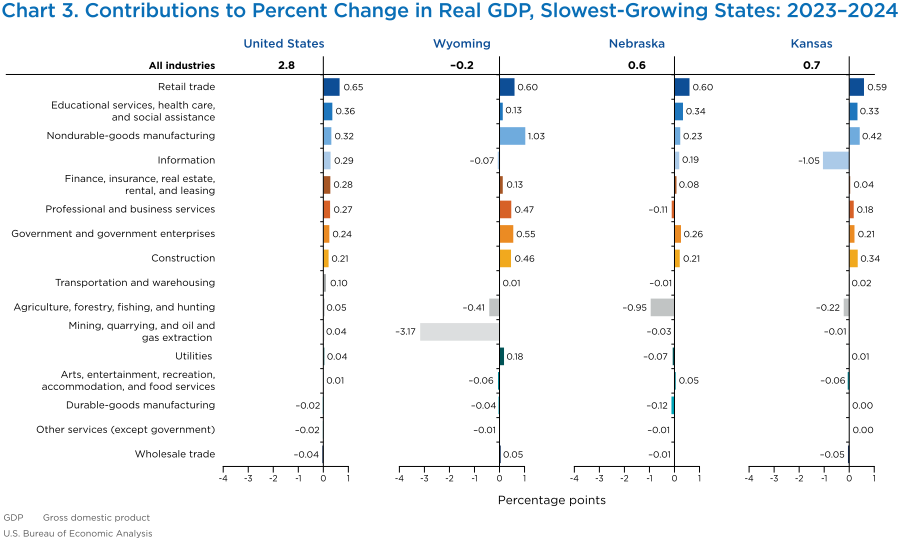
While real GDP grew in several industries within the slowest growing states—such as retail trade; educational services, health care, and social assistance; and nondurable-goods manufacturing—other industries, including agriculture, forestry, fishing, and hunting; and mining, quarrying, and oil and gas extraction, subtracted from growth, resulting in either a GDP decline or slow overall growth (chart 3). The real GDP decline in Wyoming was largely driven by mining, quarrying, and oil and gas extraction, which subtracted 3.17 percentage points and offset increases in other industries. This decline was primarily due to mineral mining. In Nebraska, agriculture, forestry, fishing, and hunting reduced growth by nearly a full percentage point, while, in Kansas, information subtracted more than a percentage point. Nebraska’s decline in agriculture, forestry, fishing, and hunting was mainly attributable to an increase in livestock purchases and decreases in inventory change and cash receipts for corn. In Kansas, the drop in information was due to a decline in the broadcasting and telecommunications industry.
State personal income
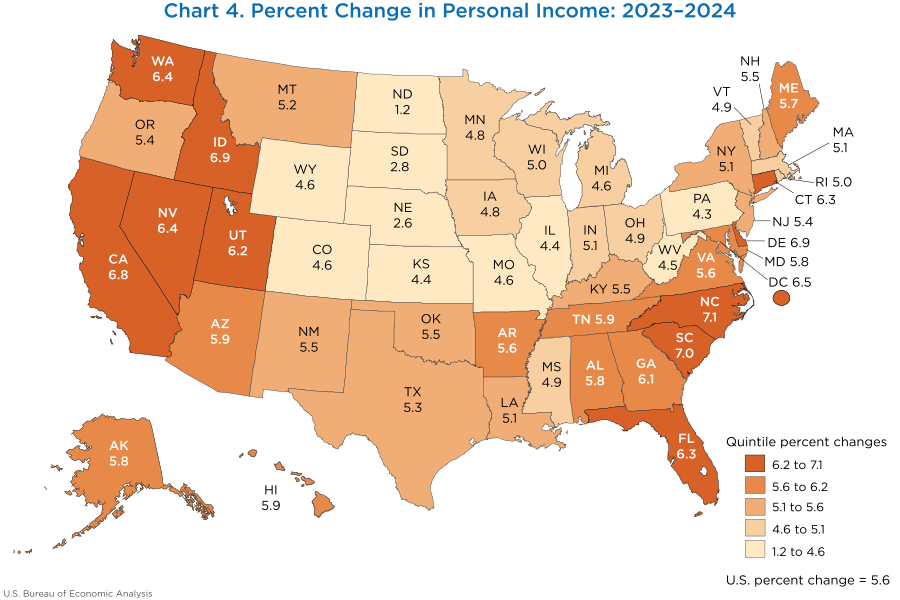
Nationally, current-dollar personal income increased 5.6 percent in 2024. Personal income increased in all states and the District of Columbia and ranged from 1.2 percent in North Dakota to 7.1 percent in North Carolina (chart 4). Along with North Carolina, South Carolina (7.0 percent), Delaware (6.9 percent), and Idaho (6.9 percent) were among the states with the largest increases in personal income. In addition to North Dakota, Nebraska (2.6 percent) and South Dakota (2.8 percent) were among the states with the smallest increases in personal income. In the District of Columbia, personal income increased by 6.5 percent.
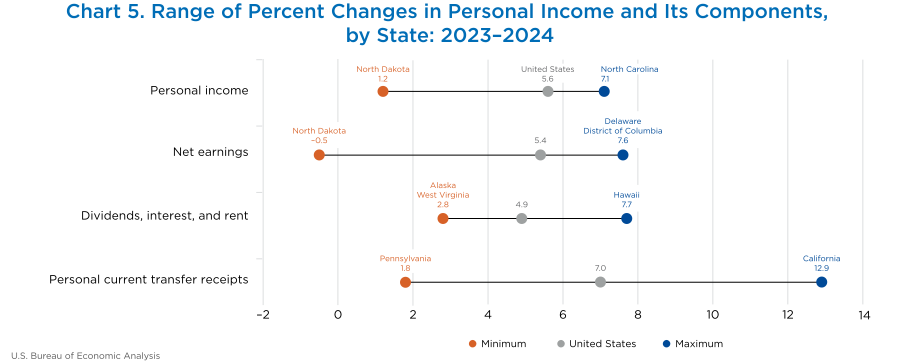
At the national level, all components of personal income had sizable increases in 2024 (chart 5). Net earnings, which include compensation of employees and proprietors’ income, increased by 5.4 percent, property income (dividends, interest, and rent) by 4.9 percent, and personal current transfer receipts by 7.0 percent. Net earnings increased in all states except North Dakota, where it declined by 0.5 percent due to a decline in proprietors’ income. The largest increase in net earnings was 7.6 percent in Delaware and the District of Columbia. Property income rose in all states, ranging from 2.8 percent in Alaska and West Virginia to 7.7 percent in Hawaii. Personal current transfer receipts also increased in all states and ranged from 1.8 percent in Pennsylvania to 12.9 percent in California.
Turning to the fastest growing states, compensation of employees, property income, and personal current transfer receipts all showed robust increases, consistent with the national trend (chart 6). The main source of variation was proprietors’ income. At the national level, proprietors’ income increased by 4.2 percent, but the increase was significantly larger in Delaware (26.7 percent), North Carolina (6.4 percent), and South Carolina (5.8 percent). Idaho was an exception among these states, with a relatively modest increase of 0.6 percent.
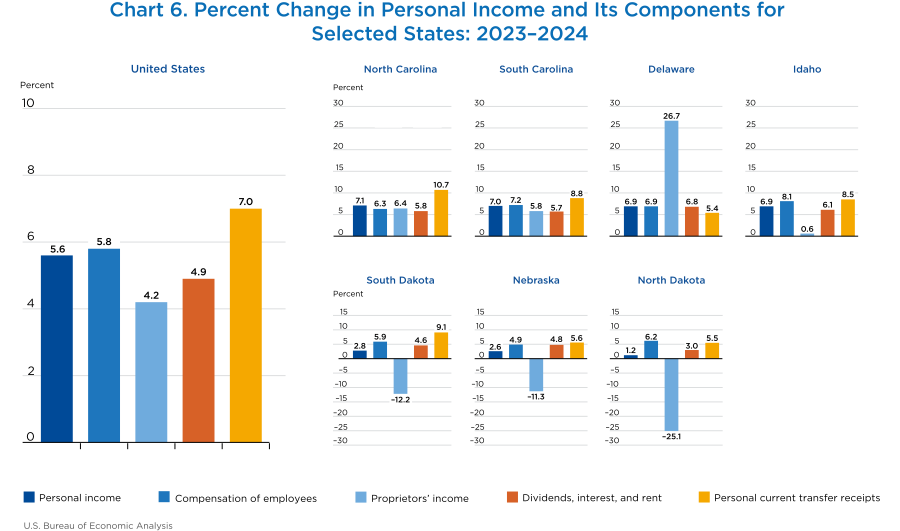
The slowest growing states were also primarily affected by proprietors’ income, which experienced a sharp decline. Proprietors’ income declined 12.2 percent in South Dakota, 11.3 percent in Nebraska, and 25.1 percent in North Dakota, due to large declines in farm proprietors’ income. Because proprietors’ income accounts for a relatively larger share of total personal income in these states, these declines offset increases in other income components, resulting in overall slower growth.
PCE by state
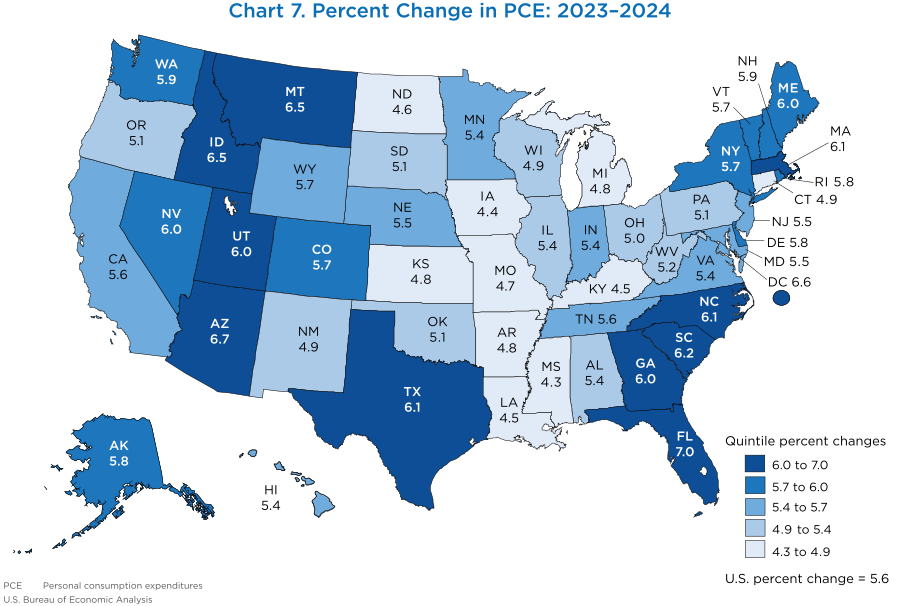
Nationally, current-dollar PCE increased 5.6 percent in 2024 (chart 7). The states with the largest increases in PCE were Florida (7.0 percent), Arizona (6.7 percent), Montana (6.5 percent), and Idaho (6.5 percent). The states with the smallest increases were Mississippi (4.3 percent), Iowa (4.4 percent), Kentucky (4.5 percent), and Louisiana (4.5 percent). Idaho was also among the fastest growing states in personal income. In the District of Columbia, PCE increased 6.6 percent.
The PCE categories with the largest contributions to total PCE growth nationally were health care (1.35 percentage points), housing and utilities (1.21 percentage points), and financial services and insurance (0.72 percentage point) (charts 8 and 9). Together, these categories accounted for more than half of the national PCE growth in 2024. Other categories with notable contributions included nondurable goods, “other services,” and food services and accommodations.
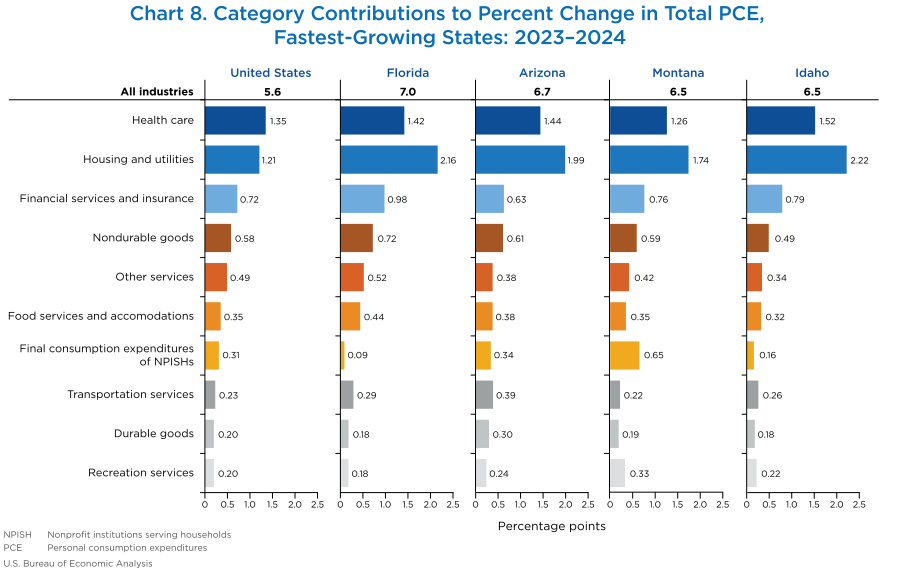
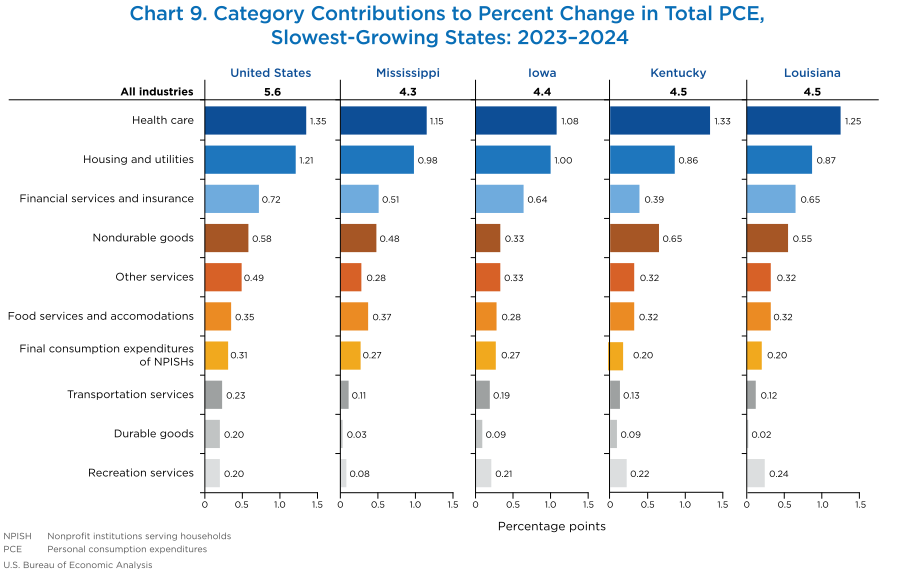
Despite differences in overall growth rates, the composition of PCE growth was similar across states and largely reflected the national pattern. In the fastest growing states, housing and utilities led PCE growth, followed by health care. Together, these two components accounted for more than half of the PCE growth in Florida, Arizona, and Idaho and contributed 3.0 percentage points to Montana’s 6.5 percent growth. Financial services and insurance and nondurable goods jointly added 1.70 percentage points in Florida, 1.24 in Arizona, 1.28 in Idaho, and 1.35 in Montana. In Montana, final consumption expenditures of nonprofits institutions serving households (NPISHs) and recreation services also made a larger contribution compared to the other fastest growing states.
Among the slowest growing states, health care was the primary contributor to PCE growth, followed by housing and utilities. Together, these two components accounted for just under half of the PCE growth in these states. Financial services and insurance and nondurable goods jointly added about 1.0 percentage point to PCE growth in these states.
BEA released updated historical estimates for GDP by state, state personal income, and PCE by state measures. The updated estimates reflect the incorporation of results from the 2025 annual update of the NEAs as well as newly available and revised regional source data. No methodological changes were made to the REA statistics. However, BEA introduced three new publication tables:
1. Contributions of earnings to percent change in personal income by industry
2. Personal income change by component
3. Spending category contributions to percent change in PCE by state
These data were previously published within the individual news releases and are now part of the regular publication tables. This section highlights the major regional source data updates and summarizes their impacts on the annual state-level measures.
Updates to source data
BEA incorporated a variety of newly available and revised regional source data, including annual source data that became available since the annual update of the REAs in September 2024. A summary of the annual major data sources for each of the statistics is presented in table 1. These data include U.S. Census Bureau 2022 Economic Census data for manufacturing, American Community Survey, Annual Survey of State Government Finances, and Annual Survey of State Government Tax Collections; U.S. Bureau of Labor Statistics Quarterly Census of Employment and Wages (QCEW) and Occupational Employment Statistics; U.S. Department of Agriculture farm statistics; and Internal Revenue Service (IRS) data.
For this annual update BEA incorporated updated IRS state-level data on sole proprietorships and partnerships for tax year 2023. The REAs also typically incorporate IRS Statistics of Income (SOI) tabulations of individual income tax data; however, BEA was unable to procure the SOI data for this year’s update and only incorporated newly available SOI public data for tax year 2022.
| Component | Industry | Updated state data source | Years covered |
|---|---|---|---|
| Gross domestic product by state | |||
| Compensation of employees | All industries | BLS, QCEW | 2020–2023 (revised), 2024 (new) |
| Taxes on production and imports less subsidies | U.S. Census Bureau, Annual Survey of State Government Tax Collections | 2022–2023 (revised), 2024 (new) |
|
| DOT, BTS (federal highway excise taxes) | 2024 (new) | ||
| Gross operating surplus | All industries | NSF, Business Research and Development Survey (R&D expenditures) | 2023 (new) |
| All industries | NSF, Higher Education Research and Development Survey (R&D expenditures) | 2023 (new) | |
| Farms | USDA, ERS (farm income and expenses) | 2020–2023 (revised), 2024 (new) |
|
| Mining | EIA (oil, gas production and prices, and coal reports) | 2024 (new) | |
| Manufacturing | 2022 Economic Census data | 2022 (new) | |
| Utilities | EIA (gas and electricity consumption) | 2024 (new) | |
| Transportation and warehousing | DOT, BTS (financial reports) | 2024 (new) | |
| Monetary authorities—central bank, credit intermediation, and related services | FDIC (branch office deposits) | 2024 (new) | |
| State personal income | |||
| Compensation of employees | Nonfarm industries | BLS, QCEW | 2020–2023 (revised), 2024 (new) |
| Farm | USDA, ERS (farm labor expenses) | 2020–2023 (revised), 2024 (new) |
|
| Military | DOD (personnel and payroll data) | 2024 (new) | |
| Proprietors' income | Nonfarm industries | IRS (net profits of proprietorships and partnerships) | 2023 (new) |
| Farm | USDA, ERS (farm income and expenses) | 2020–2023 (revised), 2024 (new) |
|
| Dividends, interest, and rent | IRS (income tax data) | 2022 (new) | |
| FDIC (deposits) | 2024 (new) | ||
| NCUA (deposits) | 2024 (new) | ||
| Personal current transfer receipts | SSA (Social Security benefits) | 2024 (new) | |
| CMS (medical benefits) | 2024 (new) | ||
| U.S. Department of Labor (unemployment insurance compensation) | 2024 (new) | ||
| U.S. Census Bureau, Annual Survey of State Government Finances (state and local government social benefits) | 2022 (revised), 2023 (new) |
||
| Contributions for government social insurance | All industries | BLS, Occupational Employment Statistics (employee wage distributions) | 2024 (new) |
| Private employer contributions for Old Age, Survivors, Disability, and Health Insurance programs | 2024 (new) | ||
| SSA (earnings and employment data) | 2024 (new) | ||
| CMS (supplemental medical insurance enrollment data) | 2024 (new) | ||
| Residence adjustment | IRS (wage data) | 2022 (unrevised), 2023 (unavailable) | |
| Personal current taxes | IRS (income tax data) | 2022 (new) | |
| U.S. Census Bureau, Annual Survey of State Government Tax Collections | 2022–2023 (revised), 2024 (new) |
||
| Personal consumption expenditures by state | |||
| Durable goods | BLS, QCEW | 2020–2023 (revised), 2024 (new) |
|
| Nondurable goods | BLS, QCEW | 2020–2023 (revised), 2024 (new) |
|
| Services | BLS, QCEW | 2020–2023 (revised), 2024 (new) |
|
| Housing and utilities | U.S. Census Bureau, American Community Survey (housing and utility expenditures) | 2023 (new) | |
| Financial services and insurance | FDIC (banking services) | 2024 (new) | |
| NCUA (credit union services) | 2024 (new) | ||
| Other services | National Center for Education Statistics (education services) | 2024 (new) | |
| Survey of International Air Travelers (net foreign travel services) | 2023, 2024 (new) |
- BLS
- U.S. Bureau of Labor Statistics
- BTS
- U.S. Bureau of Transportation Statistics
- CMS
- Centers for Medicare & Medicaid Services
- DOD
- U.S. Department of Defense
- DOT
- U.S. Department of Transportation
- EIA
- Energy Information Administration
- ERS
- Economic Research Service
- FDIC
- Federal Deposit Insurance Corporation
U.S. Bureau of Economic Analysis
- IRS
- Internal Revenue Service
- NCUA
- National Credit Union Administration
- NSF
- National Science Foundation
- QCEW
- Quarterly Census of Employment and Wages
- R&D
- Research and development
- SSA
- Social Security Administration
- USDA
- U.S. Department of Agriculture
Summary of revisions
BEA released updated annual GDP by state statistics for 2020–2023. The revisions to the GDP by state statistics reflect the incorporation of updated national values and state source data. At the national level, current-dollar GDP was revised upward for all four years: 2020 (0.1 percent), 2021 (0.2 percent), 2022 (0.2 percent), and 2023 (0.3 percent) (table 2). In general, revisions for later years tend to be larger as more complete and detailed source data become available. For most states, the revisions to current-dollar GDP by state were less than 1.0 percent in absolute value each year.
| Region | GDP | SPI | PCE | |||||||||
|---|---|---|---|---|---|---|---|---|---|---|---|---|
| 2020 | 2021 | 2022 | 2023 | 2020 | 2021 | 2022 | 2023 | 2020 | 2021 | 2022 | 2023 | |
| United States | 0.1 | 0.2 | 0.2 | 0.3 | 0.1 | 0.4 | 0.3 | 0.8 | 0.0 | 0.0 | 0.0 | 0.1 |
| Alabama | 0.2 | 0.1 | 0.7 | 1.5 | 0.1 | 0.3 | 0.1 | 0.9 | 0.1 | 0.1 | 0.1 | 1.3 |
| Alaska | 1.1 | 0.7 | −0.9 | 0.3 | 0.1 | 0.3 | 0.4 | 1.5 | 0.1 | 0.0 | 0.0 | 0.6 |
| Arizona | 0.4 | 0.3 | 1.0 | 1.4 | 0.1 | 0.4 | 0.3 | 1.3 | 0.1 | 0.1 | 0.0 | −0.3 |
| Arkansas | 0.0 | 0.1 | −0.4 | −0.3 | 0.1 | 0.9 | −2.9 | −1.8 | 0.1 | 0.1 | 0.0 | 0.4 |
| California | −0.1 | −0.2 | −1.2 | −1.1 | 0.1 | 0.3 | 0.6 | 0.5 | 0.0 | 0.0 | −0.2 | −0.1 |
| Colorado | 0.1 | 0.0 | 0.9 | 0.7 | 0.1 | 0.4 | 0.2 | 0.5 | 0.1 | 0.1 | 0.0 | −0.1 |
| Connecticut | 0.3 | 0.2 | 0.0 | −1.2 | 0.1 | 0.6 | 0.7 | 1.0 | 0.0 | 0.0 | −0.1 | −0.9 |
| Delaware | 0.3 | 0.6 | 4.8 | 5.4 | 0.0 | 0.4 | 0.3 | −3.0 | 0.0 | 0.1 | −0.1 | 0.5 |
| District of Columbia | 0.1 | 0.0 | −0.4 | −1.3 | 0.1 | 0.4 | 0.7 | 1.1 | 0.1 | 0.0 | 0.0 | −1.2 |
| Florida | 0.2 | 0.2 | 0.6 | 1.5 | 0.1 | 0.6 | 2.0 | 3.3 | 0.1 | 0.1 | 0.0 | 0.5 |
| Georgia | −0.3 | 0.1 | 0.8 | 0.5 | 0.1 | 0.3 | 0.4 | 0.5 | 0.1 | 0.1 | 0.0 | 0.4 |
| Hawaii | −0.1 | 0.3 | 0.8 | 1.3 | 0.1 | 0.3 | 1.1 | 2.1 | 0.1 | 0.0 | −0.1 | −0.1 |
| Idaho | 0.0 | 0.0 | 0.3 | −0.3 | 0.2 | 0.4 | 0.1 | 0.0 | 0.1 | 0.1 | 0.0 | −0.6 |
| Illinois | 0.0 | 0.0 | −0.3 | 0.2 | 0.1 | 0.4 | −0.5 | 0.1 | 0.0 | 0.0 | 0.0 | −0.1 |
| Indiana | −0.1 | −0.1 | −1.2 | −0.5 | 0.1 | 0.2 | −0.3 | 0.5 | 0.0 | 0.0 | 0.0 | 0.2 |
| Iowa | 0.4 | 0.5 | 0.6 | −0.3 | 0.1 | 0.1 | −0.5 | 0.2 | 0.0 | 0.0 | 0.0 | 0.1 |
| Kansas | −1.0 | −1.4 | 0.4 | −1.5 | 0.2 | 0.3 | −0.7 | −3.6 | 0.1 | 0.1 | 0.0 | −0.2 |
| Kentucky | 0.2 | 0.1 | 0.4 | 1.3 | 0.1 | 0.3 | 0.0 | 1.1 | 0.0 | 0.0 | 0.1 | 0.3 |
| Louisiana | −1.1 | 2.2 | 2.0 | 1.0 | 0.1 | 0.3 | −0.5 | 0.6 | 0.0 | 0.0 | 0.0 | 0.2 |
| Maine | 0.3 | 0.3 | −0.2 | 0.5 | 0.1 | 0.4 | 0.0 | 0.8 | 0.0 | 0.1 | 0.0 | −0.6 |
| Maryland | 0.1 | 0.0 | −0.6 | −0.1 | 0.0 | 0.3 | −0.3 | 0.7 | 0.0 | 0.0 | −0.1 | −0.1 |
| Massachusetts | 0.0 | 0.1 | 0.1 | 0.2 | 0.0 | 0.5 | −0.3 | 0.2 | 0.0 | 0.0 | 0.0 | 0.0 |
| Michigan | 0.1 | −0.3 | −0.5 | 0.3 | 0.1 | 0.3 | 0.2 | 0.6 | 0.0 | 0.0 | 0.0 | 0.1 |
| Minnesota | 0.1 | −0.1 | 0.5 | 0.0 | 0.1 | 0.3 | −0.4 | 0.4 | 0.0 | 0.0 | 0.0 | −0.9 |
| Mississippi | 0.6 | 0.4 | −0.7 | 0.2 | 0.0 | 0.3 | −0.2 | 0.1 | 0.1 | 0.1 | 0.0 | 0.2 |
| Missouri | 0.2 | −0.1 | −0.7 | −0.3 | 0.1 | 0.5 | −0.8 | −0.1 | 0.0 | 0.0 | 0.0 | 0.5 |
| Montana | 0.2 | −0.1 | 0.6 | 2.0 | 0.2 | 0.4 | 0.8 | 1.7 | 0.1 | 0.0 | 0.0 | −0.2 |
| Nebraska | −0.1 | 0.1 | 0.2 | 1.4 | 0.3 | 0.2 | −0.8 | 0.7 | 0.1 | 0.0 | −0.1 | 0.4 |
| Nevada | −0.1 | 0.2 | 2.3 | 3.0 | 0.1 | 0.4 | 0.4 | 1.3 | 0.1 | 0.1 | 0.0 | 0.1 |
| New Hampshire | 0.6 | 0.3 | 0.3 | 0.3 | 0.0 | 0.4 | 0.5 | 0.4 | 0.1 | 0.1 | 0.0 | −0.8 |
| New Jersey | 0.2 | −0.2 | −0.2 | 0.0 | 0.0 | 0.4 | 0.0 | 0.3 | 0.0 | 0.1 | 0.0 | 0.1 |
| New Mexico | 0.4 | 0.7 | 1.0 | 2.6 | 0.2 | 0.3 | 0.1 | 0.5 | 0.0 | −0.1 | 0.1 | 0.3 |
| New York | 0.5 | 0.6 | 0.9 | 0.5 | 0.0 | 0.4 | 0.1 | 0.4 | 0.0 | 0.1 | 0.0 | 0.0 |
| North Carolina | −0.1 | −0.2 | 0.2 | 0.9 | 0.1 | 0.4 | 0.4 | 1.1 | 0.1 | 0.0 | 0.0 | 0.3 |
| North Dakota | 1.4 | 1.6 | 1.7 | 2.4 | 0.1 | 0.3 | 0.0 | 0.0 | 0.1 | 0.1 | 0.0 | 1.1 |
| Ohio | 0.0 | 0.1 | −0.3 | −0.1 | 0.0 | 0.3 | −0.1 | 0.7 | 0.0 | 0.0 | 0.0 | 0.1 |
| Oklahoma | −0.2 | 0.6 | 0.6 | −0.3 | −0.1 | 0.2 | 0.0 | 0.8 | 0.1 | 0.1 | 0.0 | 0.3 |
| Oregon | −0.4 | 0.3 | −0.6 | −1.3 | 0.1 | 0.4 | −0.5 | −0.1 | 0.0 | 0.0 | 0.1 | 0.7 |
| Pennsylvania | 0.2 | 0.1 | −0.3 | −1.0 | 0.1 | 0.4 | −0.4 | −0.9 | 0.0 | 0.0 | 0.0 | −0.2 |
| Rhode Island | −0.2 | −0.3 | −1.2 | −1.6 | 0.0 | 0.3 | 0.6 | 1.0 | 0.0 | 0.0 | 0.0 | −0.5 |
| South Carolina | −0.2 | 0.0 | 1.0 | 1.7 | 0.0 | 0.3 | 0.3 | 1.0 | 0.1 | 0.0 | 0.0 | 0.3 |
| South Dakota | 1.1 | 0.6 | 0.5 | 0.6 | 0.3 | 0.2 | 0.0 | 2.2 | 0.1 | 0.1 | 0.0 | −0.7 |
| Tennessee | 0.0 | 0.3 | 0.4 | 1.6 | 0.1 | 0.4 | 0.0 | 2.3 | 0.0 | 0.0 | 0.0 | 0.3 |
| Texas | 0.5 | 1.3 | 1.6 | 2.1 | 0.0 | 0.3 | 1.5 | 2.6 | 0.0 | 0.0 | 0.1 | 0.0 |
| Utah | 0.3 | 0.3 | 0.2 | 0.7 | 0.0 | 0.2 | 0.3 | 1.3 | 0.0 | 0.1 | 0.0 | −0.2 |
| Vermont | 0.5 | −0.4 | 0.5 | 0.9 | 0.0 | 0.5 | 0.4 | 1.7 | 0.0 | 0.0 | 0.1 | 0.7 |
| Virginia | 0.1 | 0.0 | −0.2 | 0.4 | 0.1 | 0.4 | −0.2 | 0.3 | 0.1 | 0.0 | 0.1 | 0.1 |
| Washington | −0.4 | −0.6 | −0.3 | −0.8 | 0.1 | 0.4 | 0.6 | 0.8 | 0.1 | 0.0 | 0.0 | −0.1 |
| West Virginia | 0.1 | 0.7 | 0.5 | −0.7 | 0.1 | 0.2 | 0.1 | 0.3 | 0.0 | 0.0 | 0.0 | 0.5 |
| Wisconsin | 0.4 | 0.0 | 0.7 | 0.8 | 0.1 | 0.4 | 0.0 | 0.2 | 0.1 | 0.1 | 0.1 | 0.0 |
| Wyoming | 0.7 | 0.2 | −0.4 | −1.2 | 0.0 | 0.7 | 1.8 | 1.4 | 0.1 | 0.0 | −0.1 | −0.5 |
- GDP
- Gross domestic product
- PCE
- Personal consumption expenditures
- SPI
- State personal income
U.S. Bureau of Economic Analysis
Revisions to current-dollar GDP by state varied across years and states. In 2020, all states had revisions under 1.0 percent in absolute value except Louisiana (−1.1 percent), Kansas (−1.0 percent), Alaska (1.1 percent), South Dakota (1.1 percent), and North Dakota (1.4 percent). In 2021, Kansas (−1.4 percent), Texas (1.3 percent), North Dakota (1.6 percent), and Louisiana (2.2 percent) had revisions greater than 1.0 percent in absolute value. For 2022, revisions ranged from −1.2 percent in California, Indiana, and Rhode Island to 4.8 percent in Delaware, with Louisiana (2.0 percent) and Nevada (2.3 percent) also above 2.0 percent. In 2023, revisions ranged from −1.6 percent in Rhode Island to 5.4 percent in Delaware, with Montana (2.0 percent), Texas (2.1 percent), North Dakota (2.4 percent), New Mexico (2.6 percent), and Nevada (3.0 percent) also exceeding 2.0 percent. Delaware’s relatively large revisions were mainly due to updated national values for the finance and insurance sector, which accounts for over a quarter of its GDP.
State personal income statistics were revised from 2020–2023. These revisions reflect updated and new QCEW and IRS data. At the national level, personal income was revised upward for all four years: 2020 (0.1 percent), 2021 (0.4 percent), 2022 (0.3 percent), and 2023 (0.8 percent). For most states, revisions were less than 1.0 percent in absolute value across these years.
The revisions to state personal income in 2020 were minimal, within 0.3 percent in absolute value. In 2021, revisions remained within 1.0 percent in absolute value for all states. In 2022, most states had revisions under 1.0 percent in absolute value, except Arkansas (−2.9 percent), Hawaii (1.1 percent), Texas (1.5 percent), Wyoming (1.8 percent), and Florida (2.0 percent). In 2023, the revisions to state personal income ranged from −3.6 percent in Kansas to 3.3 percent in Florida, with five additional states having revisions of 2.0 percent or greater in absolute value.
Lastly, PCE by state statistics were also revised from 2020–2023. The revisions to PCE by state are largely due to updated source data including the QCEW, housing data from the American Community Survey, and updated national PCE estimates. National PCE was virtually unchanged for 2020–2022 and revised upward 0.1 percent for 2023.
Revisions at the state level were minimal. For 2020–2022, all states had revisions under 0.1 percent in absolute value, except California (−0.2 percent) in 2022. In 2023, revisions to PCE by state ranged from −1.2 percent in the District of Columbia to 1.3 percent in Alabama, with North Dakota being the only other state with a revision greater than 1.0 percent.
- For additional information on the annual update of NEAs, see Lisa S. Mataloni and Stephanie H. McCulla, “The 2025 Annual Update of the National Economic Accounts,” Survey of Current Business (November 19, 2025).
- BEA released preliminary state personal income and GDP by state statistics for 2024 on March 28, 2025. These statistics provide an early assessment of the state economies based on quarterly data.
Suggested citation
Ledia Guci and Nicholas Wetzler, “Regional Economic Accounts: Results of the 2025 Annual Update,” Survey of Current Business (January 30, 2026), https://doi.org/10.66137/KCEP5000.
